How to Choose a Car Shipping Company: Broker vs Carrier Checklist
There is no “best car shipping company” that fits every move, and this page doesn’t rank any. The company worth booking is the one that passes the same checks you can run yourself: it says plainly whether it is a broker or a carrier, its FMCSA record matches the name on your quote, the carrier’s insurance is in writing, the deposit and payment terms are clear before you pay, and its total price holds up next to other written quotes.
The checklist in one minute
| Check | Where to look | Why (source) |
|---|---|---|
| Broker or carrier? | The company’s website and contract | FMCSA (2015 advisory): “Be suspicious of any Web site where it is not clear whether the company is a broker or a transporter.” |
| MC number shown on the site | Website footer, quote, contract | FMCSA (2015 advisory): “Avoid any auto transporter or broker that does not prominently display their MC Docket number on their website.” |
| Name, status and authority in FMCSA’s records | SAFER Company Snapshot | FMCSA (2015 advisory): brokers and interstate carriers “are required to be registered with FMCSA.” |
| Carrier’s insurance | The carrier’s certificate of insurance | Brokers have no cargo insurance requirement; see below |
| Deposit: how much, when, refundable? | The written quote or contract | Brokers’ own terms differ (table below) |
| How you pay | The contract | FTC: “Never pay someone who insists that you can only pay with cryptocurrency, a wire transfer service like Western Union or MoneyGram, a payment app, or a gift card.” |
| Complaint history | FMCSA Complaint Search, review sites | FMCSA and FTC, below |
Broker or carrier: who does what
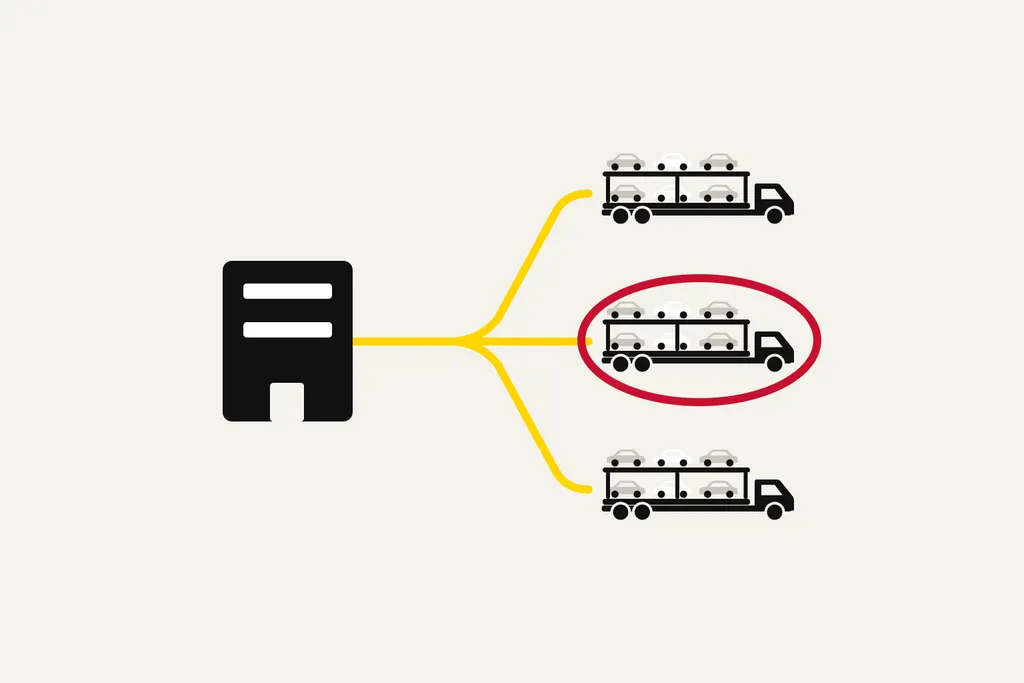
Federal rules define a broker as “a person who, for compensation, arranges, or offers to arrange, the transportation of property by an authorized motor carrier.” FMCSA’s 2015 consumer advisory on auto transporters puts it more simply: “Auto brokers only arrange the transportation of your car.” Its complaint center adds that brokers “don’t transport the property, don’t operate motor vehicles or have drivers, and don’t assume responsibility for the cargo being transported.” The carrier is the company whose truck and driver actually haul the car.
| Broker | Carrier | |
|---|---|---|
| What it does | Arranges the move with a carrier | Hauls the car |
| FMCSA registration | Required for interstate work (FMCSA advisory) | Required for interstate work (FMCSA advisory) |
| Money it must keep on file with FMCSA | $75,000 surety bond or trust fund; $0 liability and $0 cargo insurance | Liability (BIPD): $750,000 for a gross vehicle weight rating (GVWR) of 10,001 lb or more, $300,000 under 10,001 lb; cargo: $0 for non-hazardous property |
| What that money is for | Payments “to shippers or motor carriers if the broker fails to carry out its contracts” (49 CFR 387.307) | BIPD is public liability: “liability for bodily injury or property damage” (49 CFR 387.5); for the car on the truck, look to the carrier — its cargo policy and its liability under the bill of lading |
Amounts: FMCSA’s insurance filing chart (March 2026). Neither role is better by itself; what matters is knowing which one you are paying. The rules say a broker “shall not, directly or indirectly, represent its operations to be that of a carrier. Any advertising shall show the broker status of the operation.” If a company’s site talks about “our drivers” but its federal record shows only broker authority, ask which carrier will haul the car.
How to tell them apart in FMCSA records
Search the company on FMCSA’s SAFER Company Snapshot — “Users can search by DOT Number, MC/MX Number or Company Name” (our Broker check opens the official record). FMCSA’s field guide for the record explains what to read:
- Legal Name and DBA Name should match the company on your quote.
- USDOT Status: ACTIVE means “The entity’s US DOT number is active.” Other values include OUT-OF-SERVICE: “not authorized to operate.”
- Operating Authority Status: “AUTHORIZED FOR … This will list the specific operating authorities the carrier (or broker) is allowed to operate.” NOT AUTHORIZED means no interstate for-hire authority; FMCSA notes it “does not apply to Private or Intrastate operations,” so it matters for a move between states.
- Cargo Carried (carriers): “Identifies the type of cargo transported by the carrier/shipper.” For a car hauler, check that vehicles are among the listed cargo types.
MC numbers are still issued: FMCSA “has proposed no longer assigning MC Numbers,” but the change “is under consideration” (April 2026). A step-by-step walkthrough of the record is on car shipping scams and how to check a broker.
Insurance and bond
A broker’s $75,000 bond is not insurance for your car. FMCSA’s FAQ says “Household goods carriers and freight forwarders of household goods are required to have cargo insurance” — car haulers aren’t on that list, so ask what cargo policy the carrier has. Federal law also makes the carrier liable “for the actual loss or injury to the property,” though that liability can be limited by a value the shipper declares or agrees to in writing (49 U.S.C. 14706). Once a carrier is assigned, ask for its certificate of insurance and read the limit and exclusions. Details: car shipping insurance.
Contract, deposit and payment terms
The FMCSA pages cited here don’t set a deposit amount for car shipping; each company sets its own terms. Two brokers:
| Sherpa Auto Transport (broker), Feb 2026 | Web Auto Transport (broker), Aug 2026 | |
|---|---|---|
| When money is taken | “A reputable company only requires a deposit once a trucker has been assigned” | “Web Auto Transport requires $0 at booking”; a partial payment “only after we have confirmed a verified, FMCSA-licensed carrier for your shipment” |
| How much | Not stated | “Typically $100-$300, depending on the total shipment cost” |
| Balance | “due upon delivery” | “paid directly to the driver” |
Before you pay anything, get in writing: the total price, what it includes, the pickup window, the deposit amount and whether it’s refundable, how the balance is paid, and what happens if no carrier takes the job. The FTC: “Honest businesses will give you time to make a decision.”
Reviews and complaint history
FMCSA says “The general public may file complaints against moving companies, moving brokers, or auto transporters,” under “Moving Companies and Brokers.” Its Complaint Search lets you “look up a company’s complaint history for the past 6 years” by name, USDOT number or docket number. FMCSA uses complaints, “along with other sources, to make decisions about which companies to investigate.”
For review sites, the FTC suggests looking at a variety of sources and says to “watch for a burst of reviews over a short period of time.” And: “Don’t assume that, just by looking, you can spot the difference between a real review and a fake one.”
Comparing quotes side by side
Quotes compare only when they price the same job. Use the same columns for each:
| Column | Why it matters |
|---|---|
| Total price, all fees | Ask what is not included |
| Open or enclosed trailer | Priced differently; compare like with like |
| Door-to-door or terminal | Not the same service |
| Pickup window and transit days | Two different numbers — see how long it takes |
| Deposit: amount, when, refundable | Terms differ by company |
| Balance: amount and how it’s paid | Some brokers’ terms say pay the driver at delivery; the FTC warns about anyone who insists on only one payment method |
| Broker or carrier; MC/USDOT | So you can check the record |
To see how a quote compares with published rates for your miles, run the route in the car shipping cost calculator.
Before paying a deposit, check the company's USDOT or MC number.
Illustrations on this page are AI-generated to help you picture the situation. They are not photos of real homes, jobs or people.
Sources
- FMCSA — Consumer Advisory About Automobile Transporters (last updated Feb 10, 2015)
- 49 CFR § 371.2 — Definitions (broker), Cornell LII / eCFR
- 49 CFR § 371.7 — Misrepresentation, Cornell LII / eCFR
- 49 CFR § 387.307 — Property broker surety bond or trust fund (effective Jan 16, 2026), Cornell LII / eCFR
- 49 CFR § 387.5 — Definitions (public liability), Cornell LII / eCFR
- FMCSA — Insurance Filing Requirements, filing requirements chart (last updated Mar 26, 2026)
- FMCSA — Who is required to carry cargo insurance? (last updated May 26, 2023)
- FMCSA — What is Operating Authority (MC number) and who needs it? (last updated May 20, 2023)
- FMCSA — Motus USDOT Number Suffixes (MC numbers proposal; last updated Apr 16, 2026)
- FMCSA SAFER — Help: SAFER Data Field Names (copy of Oct 23, 2026 via Internet Archive; the live SAFER site did not load from our location)
- FMCSA SAFER — Company Snapshot search page (copy of Oct 16, 2026 via Internet Archive; the live site did not load from our location)
- 49 U.S.C. § 14706 — Liability of carriers under receipts and bills of lading, Cornell LII
- FMCSA Complaint Center (National Consumer Complaint Database), home page — complaint categories (accessed Nov 2, 2026)
- FMCSA Complaint Center — Eligible Complaints (last updated Oct 8, 2026)
- FMCSA Complaint Center — Search Complaints (accessed Nov 2, 2026)
- FTC Consumer Advice — How To Avoid a Scam (July 2023)
- FTC Consumer Advice — How To Evaluate Online Reviews (October 2022)
- Sherpa Auto Transport (a broker) — How to Avoid Auto Transport Scams – 2026 Guide (Feb 7, 2026)
- Sherpa Auto Transport — Auto Transport Terms & Conditions (last updated Aug 27, 2024; role: auto transport broker)
- Web Auto Transport (a broker) — Is a Deposit Required to Book Car Shipping? (Help Center, updated Aug 3, 2026)
Updated November 2, 2026