Cheapest Way to Ship a Car: What Each Saving Is Worth
For an everyday car, the cheapest way to ship it is an open trailer, a pickup window of several days, an off-peak month and, where one exists, possibly terminal drop-off. FreightWaves Checkpoint, a consumer guide with an advertiser disclosure and quote links, sums it up: “The most budget-friendly car shipping combo is open transport with terminal-to-terminal delivery.” Two of the biggest savings below: the trailer (enclosed costs 30%–60% more, per FreightWaves) and time (an expedited pickup adds 30–50%, per Web Auto Transport, a broker). A quote that beats every other one by a wide margin is not a saving until the price is in writing.
What each saving is worth
| Lever | What it’s worth | Who says it |
|---|---|---|
| Open instead of enclosed | Enclosed “typically costs 30%–60% more” | FreightWaves Checkpoint |
| Standard pickup, booked ahead, instead of expedited | Expedited is “+30-50% above standard”; last-minute bookings are possible “with expedited service, but typically cost 30-50% more” | Web Auto Transport (broker) |
| A flexible pickup window | A “tight, fixed pickup window” can push the price up “40 to 60 percent” | Web Auto Transport (broker) |
| Avoiding June–August | Peak season prices run “10-20% above average” | Sherpa Auto Transport (broker) |
| Meeting the truck near a highway | Rural areas “may add $50-$200” (Sherpa); rural ZIP codes “can add 30 to 100 percent” (Web Auto Transport) | two brokers, two figures |
| Terminal instead of door-to-door | No source here gives a dollar figure | see below |
These percentages come from different companies and aren’t meant to be added together.
Open trailer vs enclosed
Sherpa’s shipment data puts the open average at $1,238 and the enclosed average at $1,852. Web Auto Transport’s advice is to “choose open transport unless your vehicle genuinely needs enclosed.” Which cars do need it is covered in open vs enclosed car transport.
Flexible pickup dates and off-peak months
Sherpa calls flexibility with your pickup date “one of the best ways to save,” and Web Auto Transport calls it “the factor customers most underestimate.” Sherpa adds that “Giving a 3-5 day pickup window (instead of a single day)” lets it “find the best carrier at the best rate,” and Web Auto Transport suggests “a flexible pickup window of 5 or more days.” Booking ahead helps too: Sherpa recommends “2-3 weeks in advance,” Web Auto Transport “7-14 days before your first available pickup date,” and FreightWaves Checkpoint “at least two to four weeks ahead.”
The sources don’t agree on the cheapest season:
| Source | Cheaper | Pricier |
|---|---|---|
| Sherpa Auto Transport (broker) | January through March | June–August; October–November and March–April on Florida and Arizona routes (Sherpa lists March under both) |
| Web Auto Transport (broker) | January to March, September to October | Summer, winter snowbird season, Q4 holiday shortages |
| Ship A Car, Inc. (broker) | “fall usually prices best” | Summer relocations, winter snowbird lanes |
| FreightWaves Checkpoint | — | “usually highest in spring and summer” |
If your dates can move, ask for a price in two different weeks. The site’s calculator adds Sherpa’s 10–20% if you pick a June–August pickup.
Terminal-to-terminal vs door-to-door
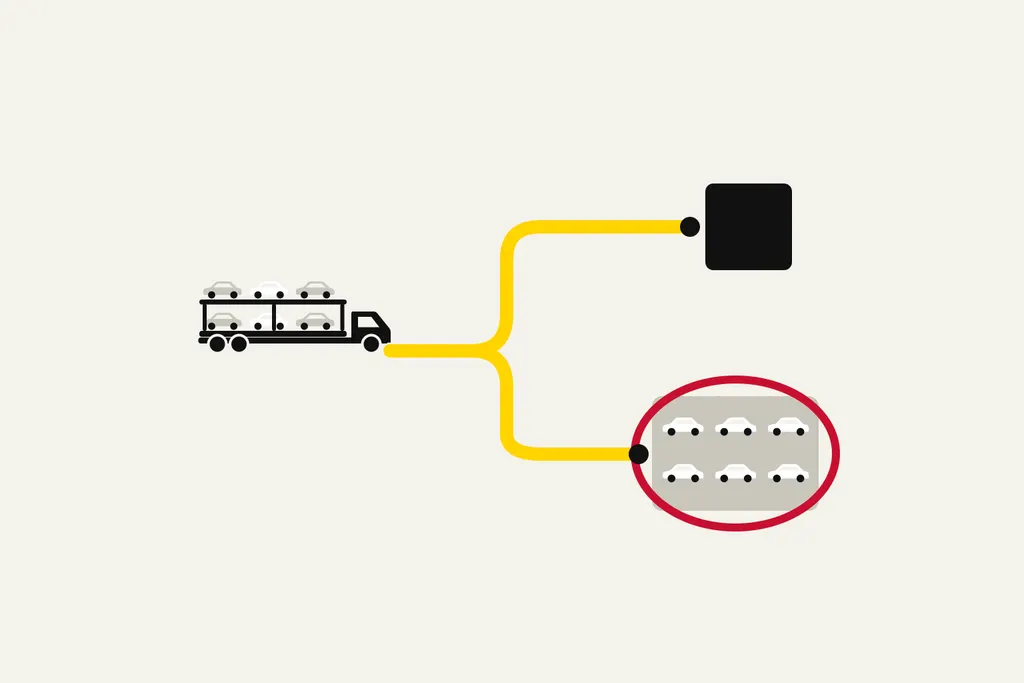
With door-to-door, the carrier comes to your address or the nearest spot a big truck can reach. With terminal-to-terminal, you drop the car at a lot and collect it from another one near your destination. All four sources here say a terminal can cost less. None puts a dollar figure on it, and one says the gap is small:
| Source | What it says about the price |
|---|---|
| FreightWaves Checkpoint | “typically cheaper than door-to-door” |
| Sherpa Auto Transport (broker) | “(where available) can save money” |
| uShip (marketplace) | “Often lower due to route consolidation” |
| Web Auto Transport (broker) | “Sometimes slightly lower”; “the cost savings are often smaller than people expect” |
Web Auto Transport goes further: “For most people, door-to-door is equal or lower in total cost.” It says terminals “typically operate Monday-Friday,” that storage fees apply after a grace period of “usually 2-5 days,” and that terminals are limited: “Not all areas have terminals.” uShip notes a terminal shipment “may require waiting for a full load.” Before you pick a terminal, add the two trips to and from the lots, plus any storage days, to the quote.
Driving it yourself: the real comparison
Driving looks free until you count fuel, hotels, meals and days off work. Ship A Car, Inc., a broker, priced both sides with its own shipping prices from September 2025 to August 2026 plus an airline ticket, against driving costs it says come from “a published national source.” Its table:
| Typical move | Ship it (plus one flight) | Drive it (car, hotels, meals) | Drive it, counting your workdays |
|---|---|---|---|
| About 450 miles | $950 | $250 | $550 |
| About 1,100 miles | $1,400 | $1,000 | $1,900 |
| About 2,200 miles | $1,800 | $1,900 | $3,400 |
| About 2,750 miles | $1,950 | $2,350 | $4,150 |
Ship A Car’s assumptions: 39 cents a mile for the car itself, $172 a night for a hotel, $68 per person per day for meals, $305 for a one-way flight, $302 for a day of your time, and a pace of 500 miles a day, which it labels “Our assumption.” On cash alone, it puts the break-even at “about 2,000 miles”; counting workdays, “shipping wins from about 550 miles.” Web Auto Transport, which also counts “time off work,” puts the line at 800 miles: shipping is cheaper “for moves over 800 miles.” Sherpa says a cross-country drive “can cost $800-$1,500+.” None of them is neutral, so plug in your own numbers.
When a low quote is a red flag
A cheap quote is only cheap if it’s the price you end up paying. FreightWaves Checkpoint warns that “Many auto shipping companies do not provide binding estimates,” so the final amount “could change.” Two brokers say outright what a far-off quote can mean:
- Web Auto Transport: “If a quote is dramatically lower than all others, treat it as a red flag.”
- Ship A Car: “A number far below the others is usually a booking hook that gets ‘adjusted’ after you commit, and a legitimate quote never needs a deposit before a carrier is assigned.”
In a 2015 consumer advisory, FMCSA, the federal regulator, said it “has received a dramatic increase in complaints against auto transporters and auto transport brokers.” The same advisory tells you to check registration and to watch card payments: “Be sure that the money you authorized to be transferred is all that is taken from your account.”
Before you take the lowest quote, get in writing the total price and whether it’s binding, the pickup window, the deposit and when it’s charged, what is included, and the carrier’s insurance. Then look up the broker’s and the carrier’s USDOT or MC number in FMCSA’s records. How to check the company is in car shipping scams and how to check a broker.
Before paying a deposit, check the company's USDOT or MC number.
Illustrations on this page are AI-generated to help you picture the situation. They are not photos of real homes, jobs or people.
Sources
- FreightWaves Checkpoint (consumer guide with an advertiser disclosure and quote links) — Car Shipping Cost Calculator: Instant Car Transport Quotes (updated May 29, 2026)
- Sherpa Auto Transport (broker) — Car Shipping Cost Calculator, «8 Factors» and FAQ (updated July 2026)
- Web Auto Transport (broker) Help Center — How Much Does It Cost to Ship a Car? (updated June 30, 2026)
- Web Auto Transport (broker) Help Center — Expedited vs. Standard Car Shipping (updated June 30, 2026)
- Web Auto Transport (broker) Help Center — How Far in Advance Should I Book Car Shipping? (updated July 21, 2026)
- Web Auto Transport (broker) Help Center — Door-to-Door vs. Terminal-to-Terminal Shipping Explained (updated June 30, 2026)
- uShip (shipping marketplace) — Door-to-Door vs. Terminal-to-Terminal Car Shipping (Feb 27, 2026)
- Ship A Car, Inc. (broker) — What is the Average Cost to Ship a Car Per Mile? (updated Sept 5, 2026)
- Ship A Car, Inc. (broker) — Is It Cheaper to Ship a Car or Drive It? The 2026 Break-Even Report (Sept 22, 2026)
- FMCSA — Consumer Advisory About Automobile Transporters (2015; last updated Feb 10, 2015)
Updated November 2, 2026